
What the Utah Department of Public Safety, Bureau of Criminal Identification Is
The Utah Department of Public Safety, Bureau of Criminal Identification is the central keeper of Utah criminal history. Utah Code Sections 53-10-201 and 53-10-202 establish BCI and set its duties. The bureau operates Utah Computerized Criminal History, known as UCCH. It also maintains fingerprint systems, verifies criminal and authorized civil prints, supports UCJIS, audits agencies, and compiles statewide UCR and NIBRS crime data.
Utah BCI is not a public people-search service. Its repository joins arrest cycles to identity through fingerprints, then adds reported outcomes. The bureau also handles personal record review, challenges, expungement eligibility, quality controls, and limited programs that have their own statutory authority. Western Identification Network and FBI interfaces serve authorized fingerprint channels. Those functions sit beside, but do not erase, the role of courts and local law enforcement.
BCI's official bureau overview shows how criminal records are one part of a wider identification bureau.
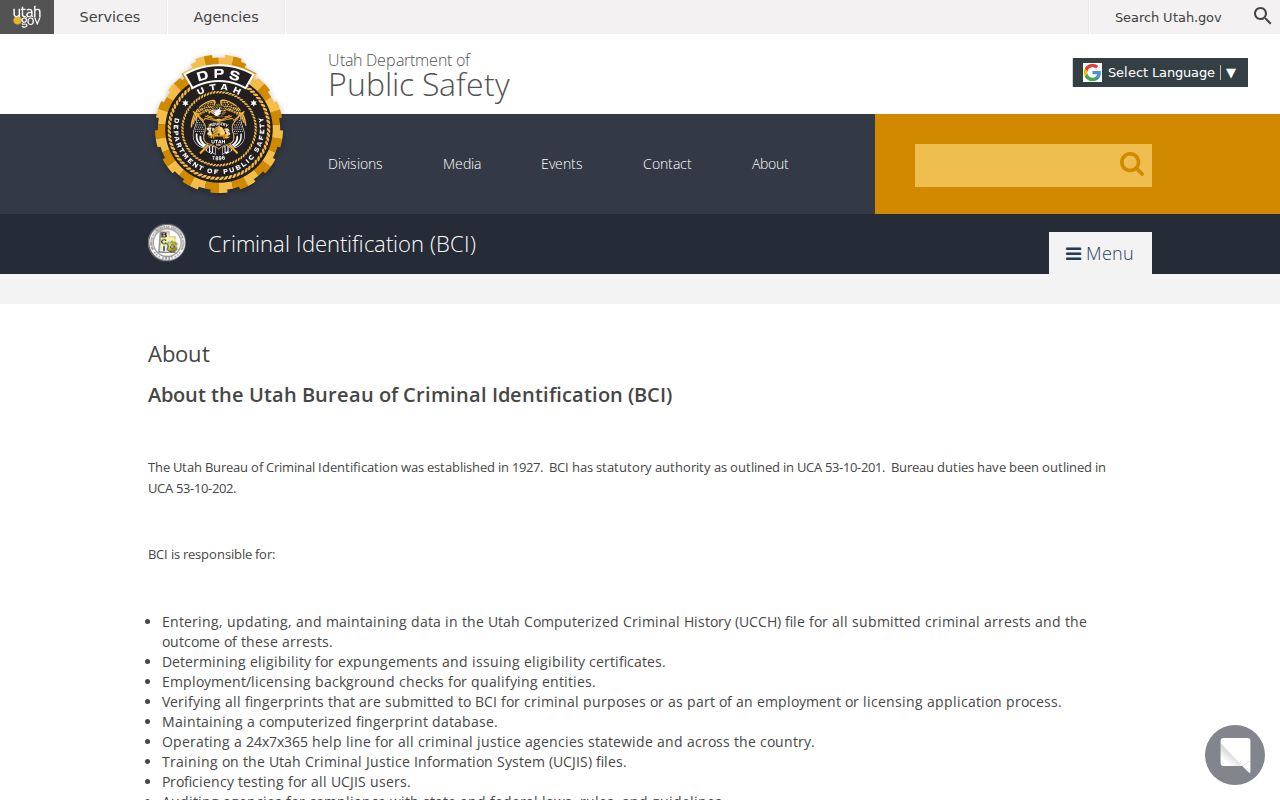
The bureau's UCCH, fingerprint, audit, and crime-reporting work explains why its record differs from a court docket.
Utah BCI Criminal Record History
Utah BCI dates to 1927. Central fingerprint identification was its first repository role. The bureau later added UCCH, a computerized fingerprint database, UCJIS training and audits, statewide crime-data compilation, and WIN/FBI connections. The technology changed, but identity remains the key dividing line between a Utah BCI rap sheet and a public search based only on a name.
Utah's modern system deliberately keeps two doors apart. Right of Access gives the subject a fingerprint-supported copy of their own Utah history. Xchange permits paid public name searches of court cases. That split helps prevent a court index from being presented as the official repository file. It also means a person checking their own history may need both systems to understand why a disposition appears in one before it reaches the other.
Note: BCI's history is statewide, but every entry still begins with a source agency, prosecutor, or court outside the central repository.
Utah BCI Criminal History Check Options
BCI products differ by who may order them. The public route is Right of Access, which is limited to the subject's own Utah record. A Third-Party Release can direct that personal result to a named recipient, but it does not create a public search right. Name/DOB, WIN fingerprint, FBI, and Rap Back products require authorization tied to a statute or qualifying program.
| Product | Who May Order | What It Returns | Cost |
|---|---|---|---|
| Right of Access | Subject of the record | Fingerprint-supported copy of the subject's Utah history | $20 |
| Record Challenge | Subject disputing their own Utah history | BCI review of an alleged identity, arrest, or disposition error | $20 |
| Name/DOB Check | Statutorily authorized agency or entity | Authorized Utah name and birth-date response | $20 |
| WIN Fingerprint Check | Authorized qualifying program | Authorized western-state fingerprint history | $20 BCI fee |
| Rap Back | Eligible authorized program | Ongoing notice of reportable criminal-history changes | $10 |
The official BCI criminal-record services page is the right place to verify the current fee and form.
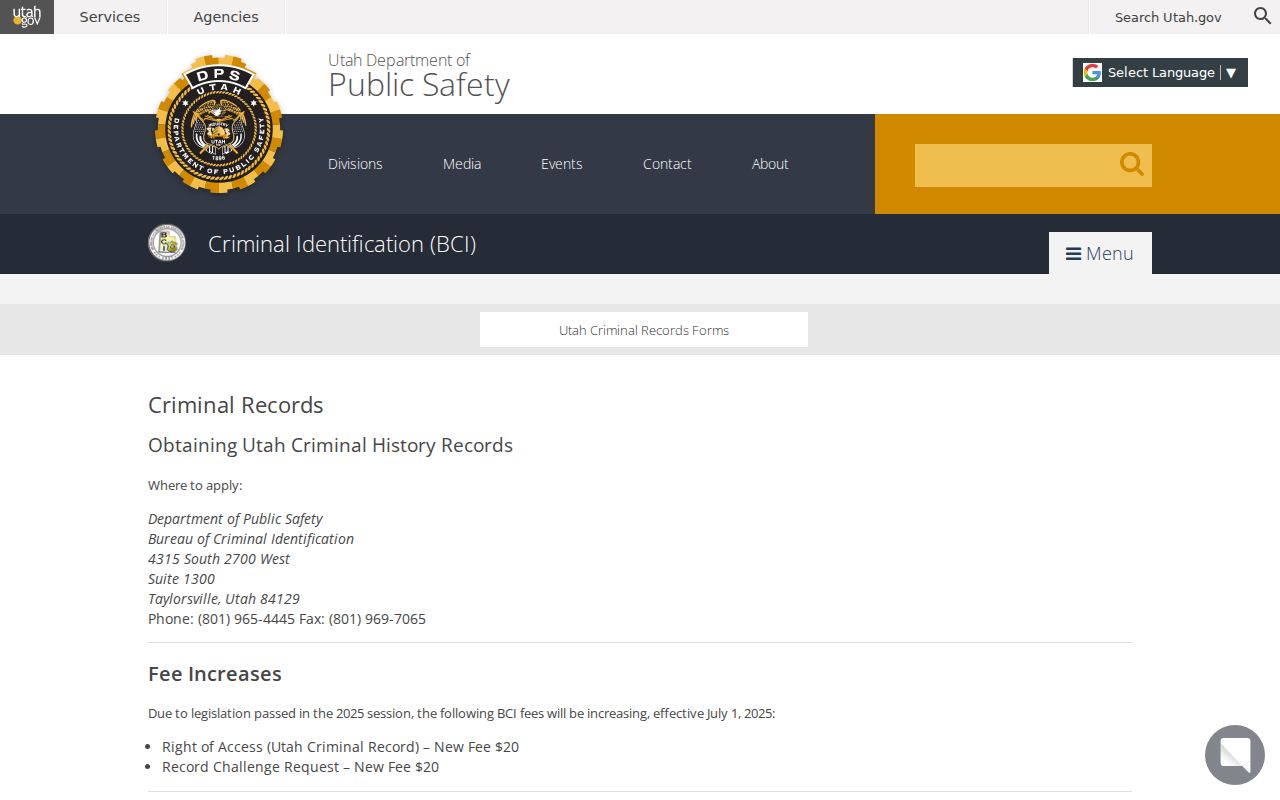
The service page separates personal access and challenge channels from checks reserved for authorized programs.
Utah BCI Has No Public Name Search
A general member of the public cannot type another person's name into a Utah BCI portal. Section 53-10-108 limits dissemination of BCI criminal history and fingerprint information. BCI's $20 Name/DOB product is confined to entities with legal authority. Consent alone should not be mistaken for an unrestricted public product.
For self-review, use Right of Access. For public case history, use Utah Courts Xchange or request a public file from the filing clerk. Xchange is a court repository. It is not UCCH and does not become a BCI rap sheet simply because it searches statewide. GRAMA likewise cannot override criminal-history dissemination law or force BCI to release a protected UCCH record.
Key distinction. A Utah BCI record is fingerprint-linked criminal history. Xchange is a public court index and docket channel. Each answers a different records question.
How Records Reach Utah BCI
A Utah criminal history begins outside BCI. An arresting sheriff, municipal police department, Utah Highway Patrol unit, or other agency creates the arrest event. A qualifying booking supplies fingerprints. BCI uses the print transaction to connect the arrest to identity in UCCH. Prosecutors then choose charges, and court clerks maintain the filed case and outcome.
Data flow: County Arrest › Fingerprint Submission › Utah Department of Public Safety, Bureau of Criminal Identification › Court Disposition Reporting › Rap Sheet
Utah Code Section 53-10-208.1 requires covered dispositions to reach BCI within 30 days. It includes convictions, guilty pleas, dismissals, acquittals, pleas in abeyance, and other listed outcomes. BCI must match the court event back to the correct arrest cycle. An unmatched or delayed disposition can make a rap sheet look incomplete even when the court docket has already changed.
Utah BCI Record Timing Gaps
Xchange reads from the courts' CORIS system and updates when clerks enter events. UCCH follows a separate fingerprint and disposition-matching chain. As a result, Xchange may show a dismissal before the Utah BCI criminal record does. The reverse can happen too. A fingerprint-supported arrest may exist in UCCH even when charges were not filed or the related public case is sealed, expunged, or outside older CORIS coverage.
No current official statewide disposition-completeness rate is published. The NIBRS submission rate is not a substitute. BCI reported 137 agencies for 2024, representing 95.13% of agencies and 98.14% of Utah's population, but those are crime-reporting coverage figures. They do not prove that every UCCH arrest has a matched outcome.
Error ownership follows the source. Ask the filing clerk to correct a court entry. Ask the arresting agency about its report. Then use BCI's challenge route if UCCH remains wrong.
Ordering a Check From Utah BCI
A personal Utah criminal record can be requested in person or by mail. The packet needs the current Right of Access application, an official four-finger simultaneous impression or accepted print card, valid photo identification, and the $20 fee. BCI mails the result to the application address. It does not fax or email the criminal history. A Third-Party Release is needed to mail the subject's result elsewhere.
- Choose Right of Access for a copy of your own Utah record.
- Download the current form and arrange an official fingerprint impression.
- Copy acceptable identification and select an allowed payment method. Never mail cash.
- Submit at BCI or mail the complete packet to the address on the current form.
- Compare the mailed result with the original court file for any entry that needs context.
The official in-person and mail instructions show the current process.
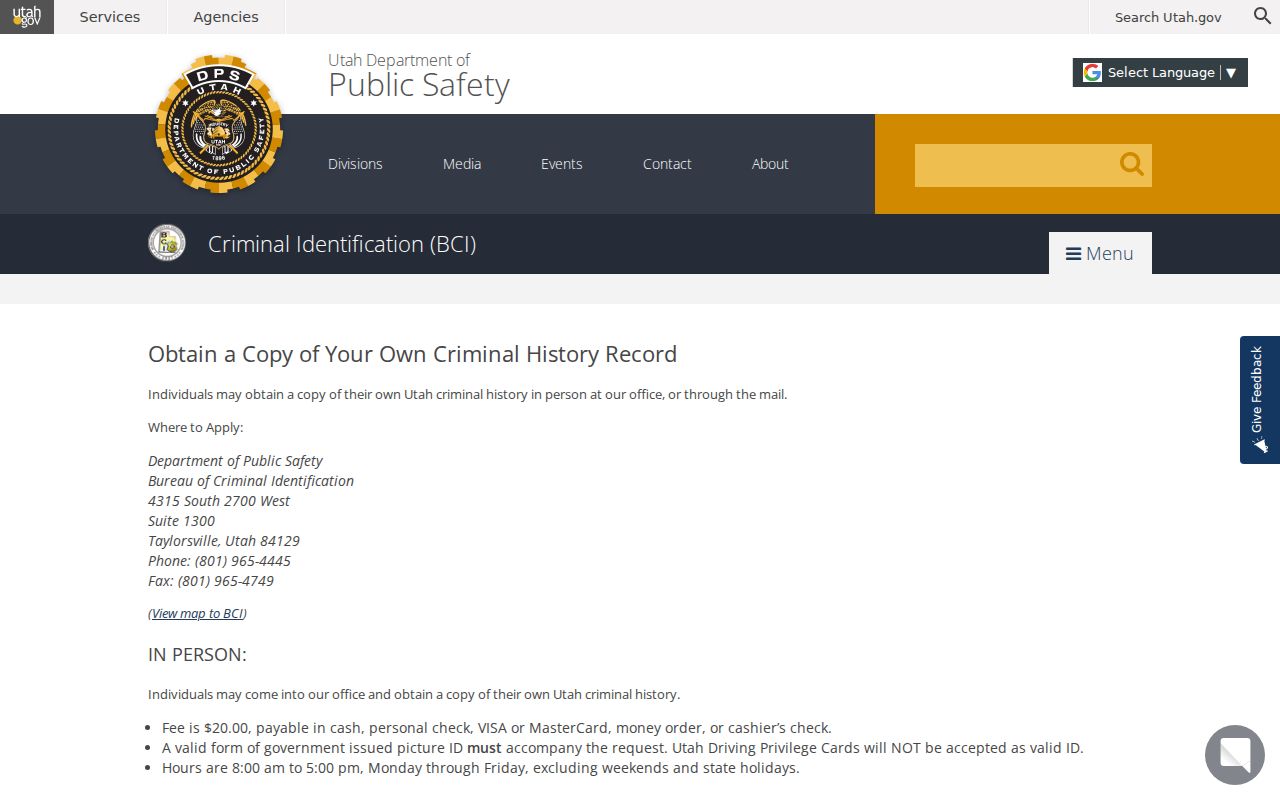
Those instructions should control over older saved forms when fees or details differ.
Utah BCI Right of Access
The current application asks for identity and contact details, prior names, physical descriptors, signature, payment information, and fingerprints. A printing official documents the ID reviewed and the print event. Applicants should use the live form rather than recreate those sensitive fields online. Utah Driving Privilege Cards are not accepted for this service.
BCI's official identification page lists accepted government photo ID and narrow exceptions.
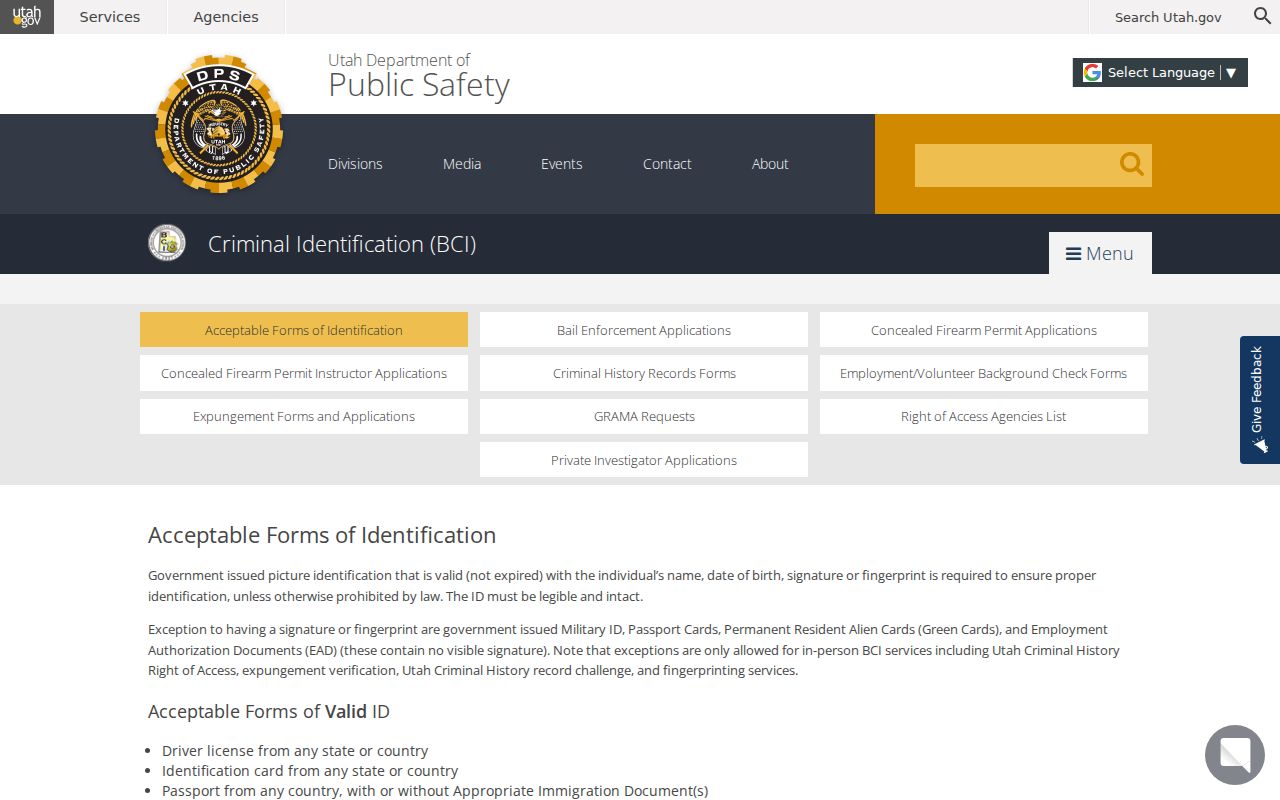
The ID rules protect the subject-only route by tying the request to the person whose record will be mailed.
A participating local Right of Access agency can provide only the requester's own Utah history. Policies, hours, fingerprint service, and local charges vary. Contact the agency before going, then use the Utah county directory to reach the local layer. Ordinary BCI non-criminal fingerprinting uses appointments, while Utah criminal-history and expungement applicants do not need a fingerprint appointment at the BCI counter.
County Records vs Utah BCI Checks
A Utah BCI rap sheet and a county file are partners, not substitutes. UCCH compiles fingerprint-associated arrest and outcome lines across the state. A county clerk holds the original docket and public documents. The arresting agency holds its report, while the jail holds booking and custody events. Search the BCI record for statewide identity history, then use the county source for the full event.
| Utah BCI Check | County Records | |
|---|---|---|
| Coverage | Submitted Utah history across 29 counties | Events held by one local source |
| Identity | Fingerprint-associated arrest cycles | Name, case, incident, or booking identifiers |
| Freshness | Depends on reporting and disposition matching | Changes as the local case or custody event moves |
| Detail | Compiled rap-sheet lines | Original docket, orders, reports, or jail logs |
| Correction | BCI challenge after source documents are fixed | Start with the clerk, police records unit, or jail |
When a court outcome and UCCH line conflict, obtain the official court record first. That evidence supports a focused BCI challenge and avoids asking the repository to change a source record it does not own.
Utah BCI Fingerprint Channels
WIN fingerprint checks, FBI components, and Rap Back operate only through qualifying authority. The agency or program supplies the ORI, reason code, consent form, and routing instructions. A generic fingerprint card does not guarantee the correct search. BCI lists a $20 WIN fee and a $10 Rap Back subscription, while capture or FBI components may add program-specific amounts.
Only the subject may obtain an FBI Identity History Summary for personal review. That separate national route is available from FBI EDO, by direct mail, or through an approved channeler. The direct FBI fee is $18. An FBI summary and a Utah BCI record can differ because agencies may submit different events to the two systems.
The BCI contact form routes program questions by division.
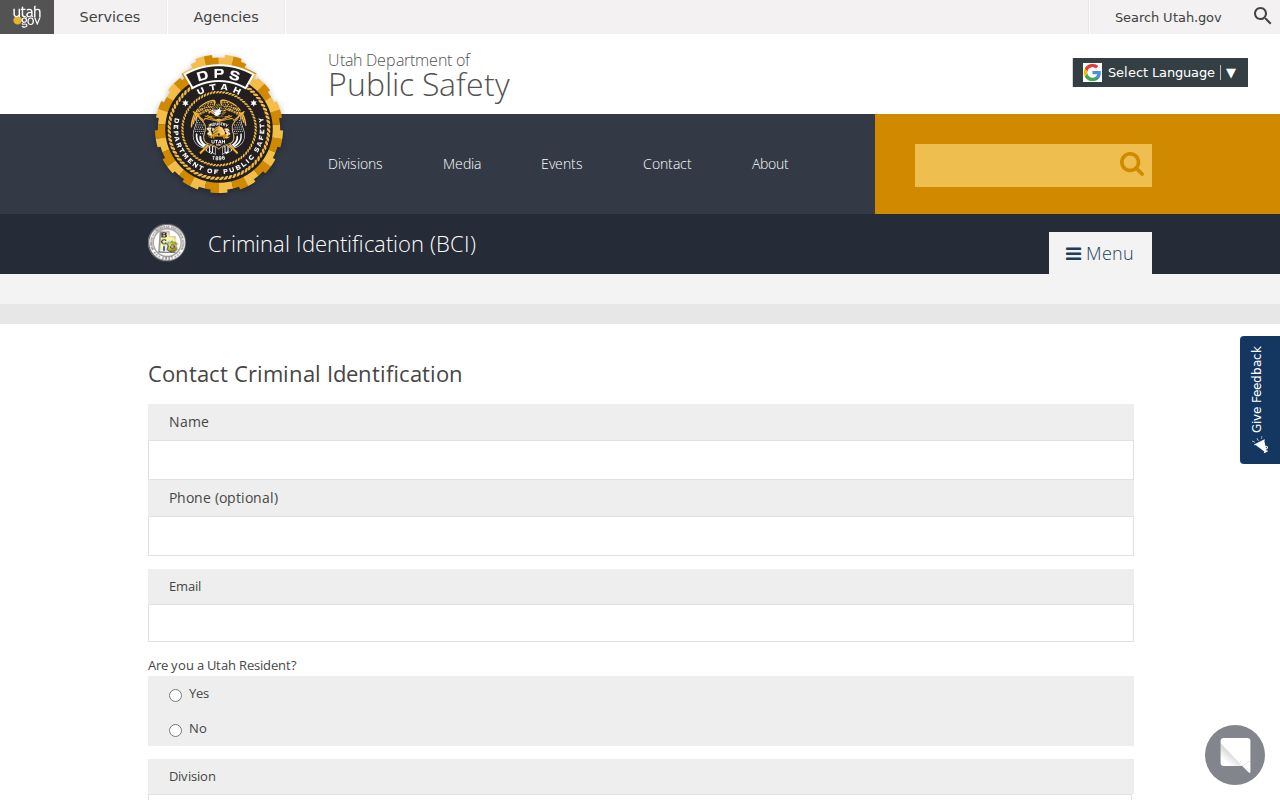
Use that form for questions. Do not transmit a criminal-history application or protected record through a general message field.
Fixing Errors in a Utah BCI Record
Order your own Right of Access record before alleging an error. Mark the agency, arrest date, charge, case, and disposition at issue. Then obtain certified or official source records. A challenge can correct wrong identity links, arrest details, or outcomes. It cannot expunge an accurate entry. If the court file is wrong, correction must start with that clerk.
- Obtain your fingerprint-supported Utah BCI record.
- Compare each disputed line with the original agency and court records.
- Submit the current Record Challenge form, fingerprints, explanation, and supporting documents with the $20 fee.
- Order or review a fresh record after BCI completes the correction.
The Utah BCI forms index supplies the current Right of Access, challenge, third-party release, and GRAMA forms.
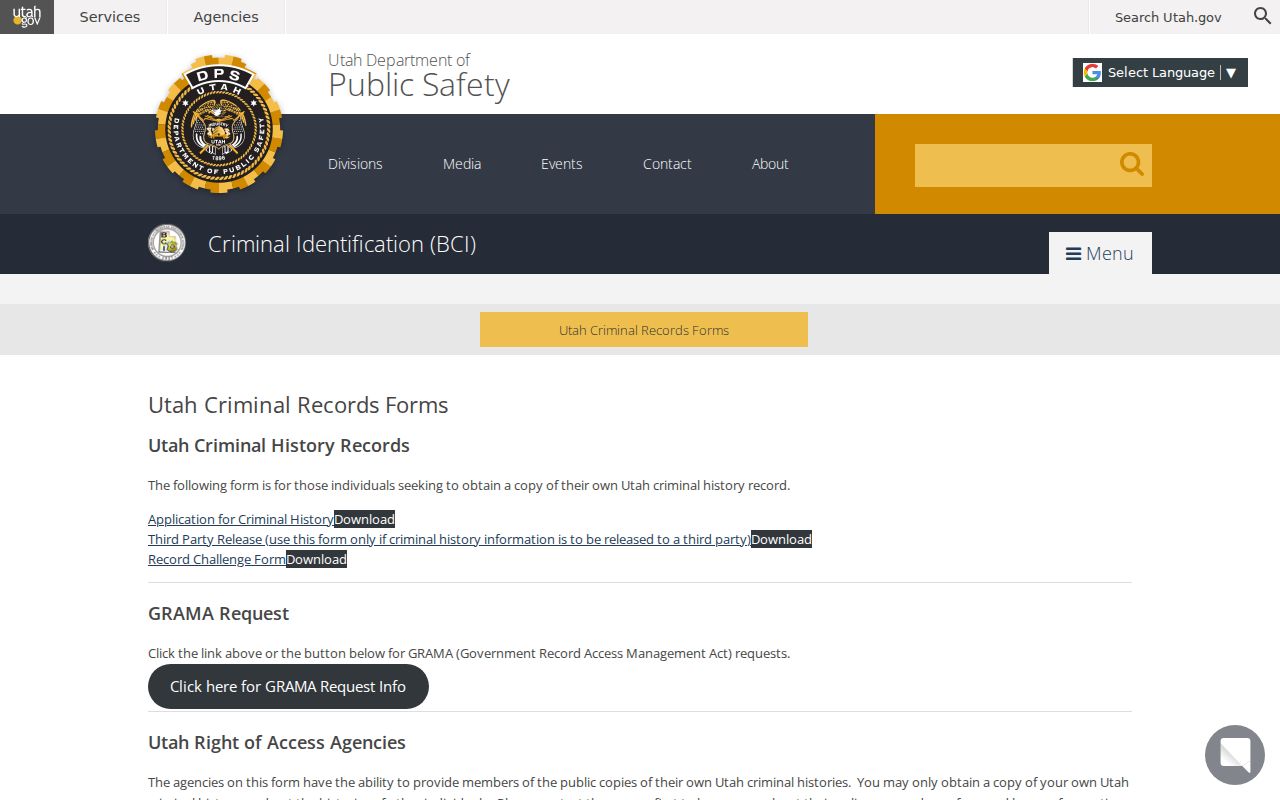
The current live fee notice controls if an older downloaded form displays a different amount.
Utah BCI Record Modernization
BCI's July 2026 strategic plan calls for redesigning the Utah Criminal History database by December 31, 2027. It also sets a goal to clear an identified backlog by the end of 2026 and to improve completeness and accuracy before release. A related 2026 performance measure aims to enter LiveScan fingerprint-card data into UCCH or AFIS, or remove it from the queue, within seven days.
These are goals and workflow measures. They are not proof that all Utah criminal history is complete or that every disposition is matched. Their value is more practical: they identify where BCI is focusing its quality work. A person reviewing their own file should still compare it with source records and use the challenge path when the systems disagree.
Utah BCI's repository has grown far beyond its 1927 fingerprint file. The planned redesign continues that history while preserving the need for careful identity matching, timely court reporting, and source-based corrections.