
Running a Sex Offender Check in Utah
The Utah Bureau of Criminal Identification registry page is the official entry point for a statewide sex offender search. Its public gateway covers people whose information is publishable under Utah law. It also includes kidnap and child abuse offender categories named in the registry title. Utah BCI has administered the system since responsibility moved from the Department of Corrections in July 2024. The public list is a notification record, not the person's complete criminal history.
Start with a name or geographic search. Then test a possible match against the photo, aliases, physical traits, address, offense, and registering jurisdiction shown. Similar names are not proof of identity. Utah DPS does not guarantee that every entry is complete or current. A careful Utah registry check treats the profile as a lead that can be confirmed through the conviction court.
The official Utah BCI registry source also shows how administration now sits within public safety.
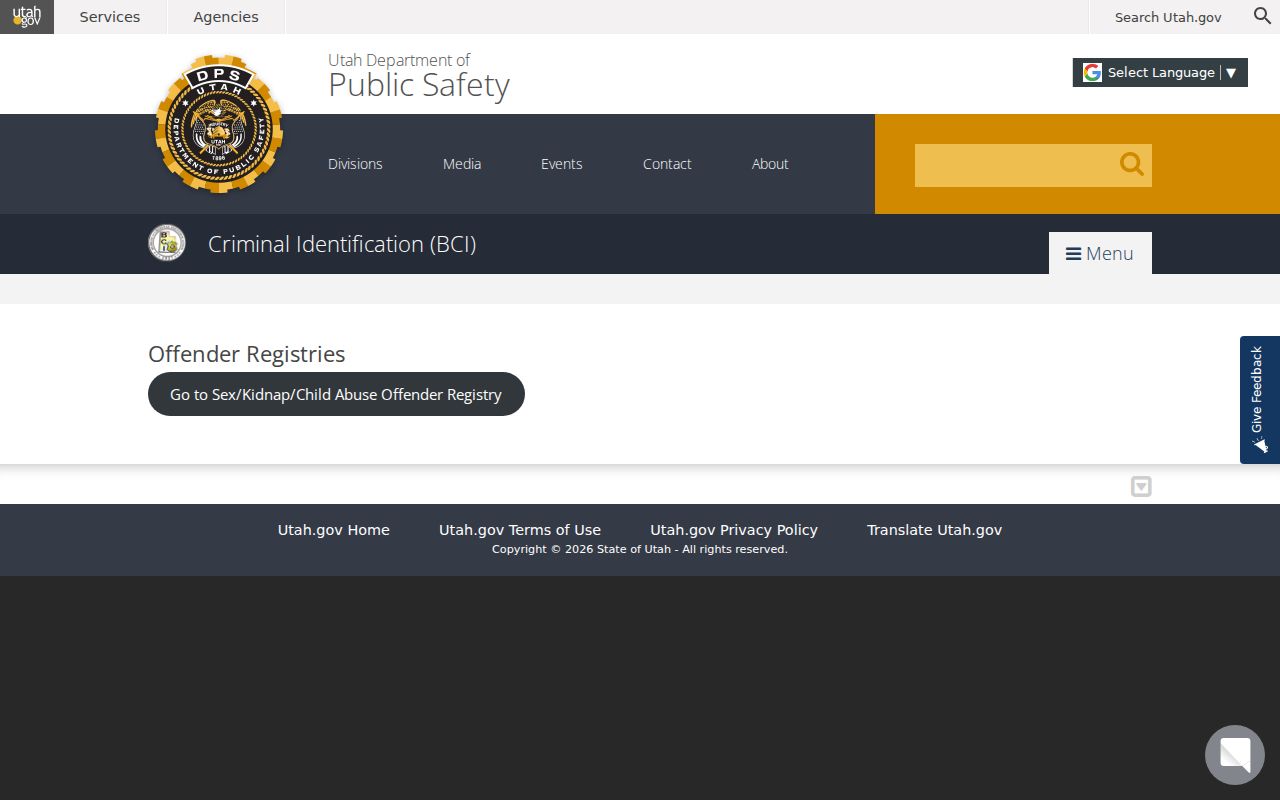
The captured landing page distinguishes the current BCI channel from older pages that still associate the registry with UDC.
Utah Registry Duration Lists
Utah does not present its system as public Tier I, Tier II, and Tier III risk labels. Utah Code Section 53-29-203 instead assigns ten-year or lifetime registration through offense and status lists. The exact conviction statute matters. So do the conviction date, custody or supervision periods, prior cases, and any duty imposed by another jurisdiction. A plain-language offense title alone cannot settle the duration.
Ten-year status does not mean the public should calculate an end date from the conviction date. Statutory start and tolling rules can change the count. Lifetime status also does not mean that no legal review route exists. Sections 53-29-204 through 207 create narrow, fact-specific forms of relief. Some petitions require a BCI certificate first. An expungement does not automatically cancel an independent registry duty.
Note: Utah's live Chapter 29 text controls because 2025 and 2026 legislation changed offense categories, monitoring rules, and agency duties.
How to Search the Utah Sex, Kidnap, and Child Abuse Offender Registry
The vendor gateway is session and JavaScript dependent. Its official functions support name and geographic searches, though exact controls can change. Radius values and a county dropdown were not stable enough in the official research to promise. Enter through BCI, accept the disclaimer, search more than one way, and read a profile without adding facts the profile does not state.
- Open Utah BCI's offender registry page and continue to the official Community Notification gateway.
- Search the full name and known aliases, or use an address, city, or ZIP Code for geographic results.
- Compare the profile's photo and several identifiers. Never rely on a name alone.
- Use the conviction jurisdiction to check the public court disposition when more context is needed.
| Field Label | Type | Required | Notes |
|---|---|---|---|
| Disclaimer acknowledgment | Button | Yes | Opens search after use limits are accepted |
| First and Last Name | Text | Conditional | Name mode; partial matching is not guaranteed |
| Address | Text | Geographic mode | Supports proximity searching where geocoding works |
| City, State, ZIP | Text or selection | Optional | Narrows Utah geographic results |
| Radius or Distance | Dropdown | Address mode | Exact values depend on the current vendor interface |
| Search and Reset | Buttons | No | Runs or clears the query |
Utah Registry Data Boundaries
The registry collects more than it publishes. Under Section 53-29-304, registration data can include fingerprints, DNA if not already supplied, Social Security number, passport or immigration documents, telephone designations, online identifiers, vehicle details, work or school information, and residence data. Much of that supports identity, verification, and enforcement inside the system. Collection does not make every field public.
The public set is governed mainly by Section 53-29-404. It includes names and aliases, a current photo, key physical traits, residential addresses, vehicle descriptors and plate, registrable offenses, and other information DPS deems proper. Victim identity and location must be redacted. Passwords, fingerprints, DNA, Social Security numbers, and document images are not public merely because the agency collects them.
The Legislature's official collection rule shows the breadth of the nonpublic working record.
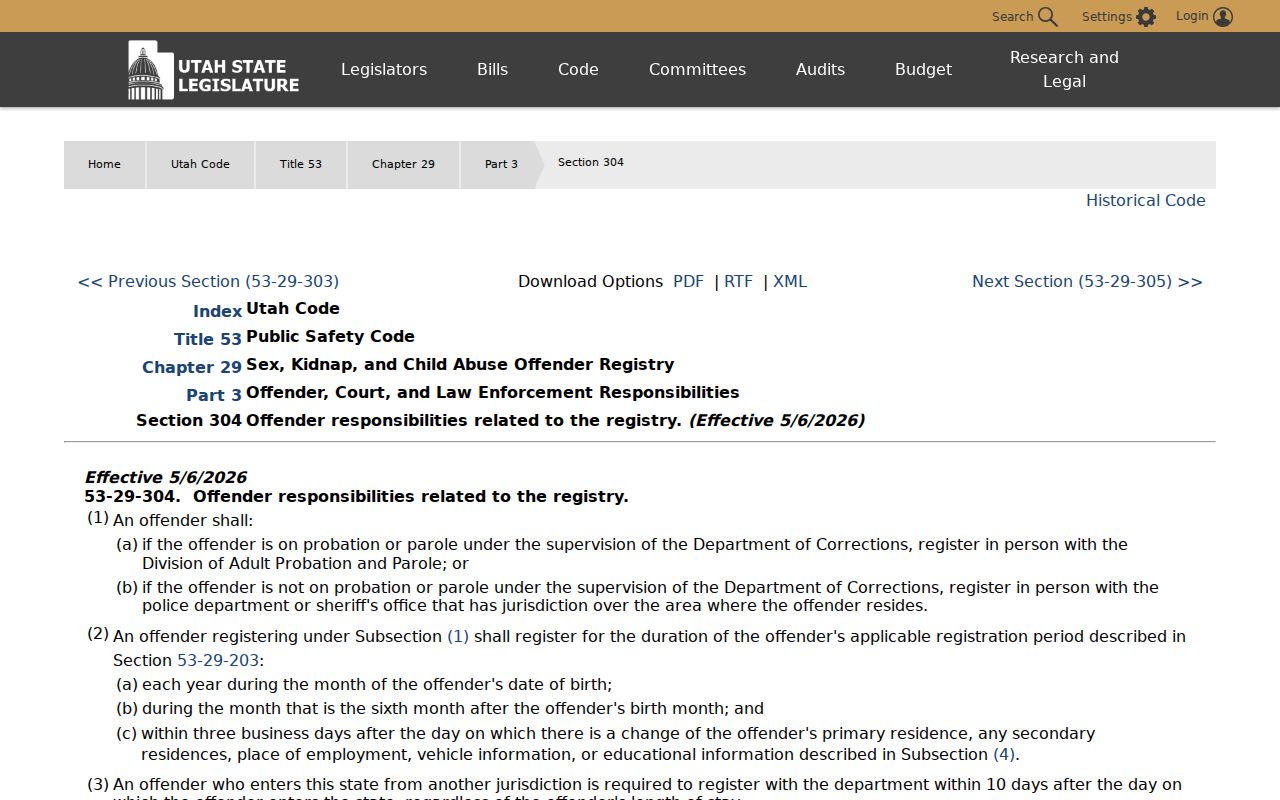
That difference matters when a public profile seems brief: an omitted field may be protected, not missing from the agency's internal file.
Inside a Registry Profile
A Utah registry profile joins identity, place, status, and conviction fields. Read each field literally. A listed offense is not a full account of the case. A compliance label does not predict future conduct. The profile also does not establish that every person at the address is registered. Public court records remain the stronger source for charges, judgment, amendments, and sentence.
| Name & Aliases | Published names, former names, and qualifying aliases used to reduce false matches. |
|---|---|
| Photo & Description | Current image plus age or birth details, height, weight, hair, eyes, and other identifying traits. |
| Residence | Primary, secondary, or temporary Utah addresses at the public level required by law. |
| Offense | Registrable offense, conviction jurisdiction and date, and related case or statute data when supplied. |
| Vehicle & Activity | Publishable vehicle, professional license, Utah school, work, or volunteer information. |
| Registration Status | Registering jurisdiction and update or verification information displayed by the current interface. |
Use several matching fields before concluding that a Utah registry result concerns the person being researched. If a field looks wrong, report it to the registering agency or BCI instead of making a public accusation.
Utah and National Registry Searches
The National Sex Offender Public Website provides a U.S. Department of Justice layer across participating states, territories, and tribal jurisdictions. It helps when an address or conviction crosses Utah's boundary. NSOPW supports name, ZIP, jurisdiction, and address-radius searches. Yet it federates source registries rather than replacing them.
A no-result radius search is not a universal clearance. Address matching depends on coordinates provided by each registry and on successful geocoding. Search the Utah portal directly as well. Try name variants, old names, and more than one location. If a potential match appears, return to the responsible jurisdiction's profile for the most direct public record.
The federal NSOPW interface illustrates the added cross-state search layer.
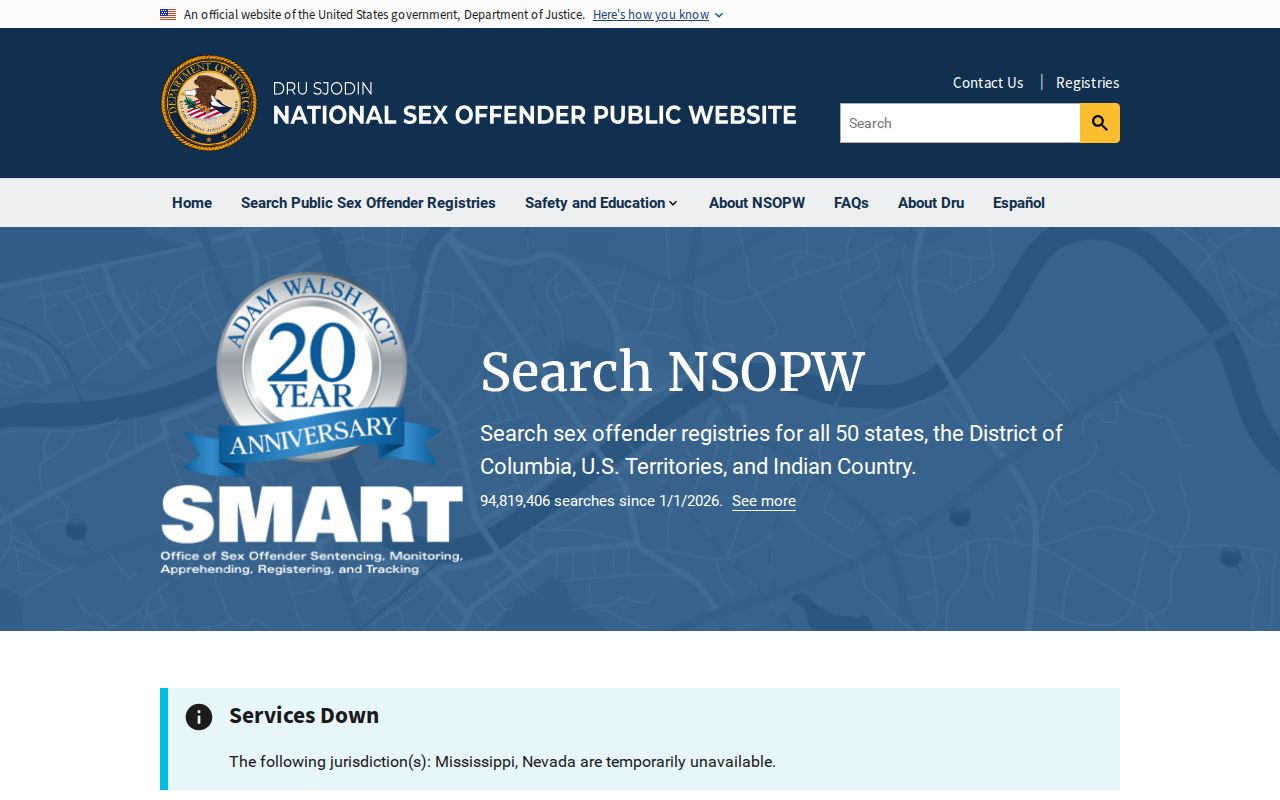
Its national reach is useful, but Utah BCI remains the source for Utah publication and data-correction questions.
Utah Registration Requirements and Levels
Chapter 29 divides duration by statutory category, not a public risk tier. Many registrants verify in person during the birth month and again six months later. Changes such as residence, vehicle, work, or education generally must be reported within three business days. A lifetime parole agreement can require address checks at least every 60 days. The exact duty depends on the governing section and the person's case.
| Utah Category | Base Duration | Verification or Review |
|---|---|---|
| Ten-year listed offense or status | Ten years under statutory counting rules | Regular in-person verification and prompt change reports |
| Lifetime listed offense or status | Life unless a specific relief route applies | Regular verification; added supervision terms may apply |
| Out-of-state, federal, or tribal duty | Based on Utah comparability and originating duty | Confirm directly with BCI before a move |
| Ten-year removal petition | Route under Section 53-29-205 | Elapsed time, compliance, and court findings required |
Fees also require a current source. Utah's former fixed state amount shifted after July 1, 2026 to an annual fee set through the state fee process. A local registering agency may assess up to $25, while people confined in listed secure settings are exempt during confinement.
Utah Registry Agency Routing
Responsibility changes with the event. UDC registers people when they enter or leave state or contract custody, begin probation, reach parole, move through community residential programs, or end supervision. AP&P handles related supervision duties. A county sheriff registers qualifying people committed to or released from a non-UDC county jail. Certified municipal or county personnel handle residents who are not under AP&P.
Courts also report. A Utah court must forward a signed registrable judgment and sentence within three business days. Later orders that modify, withdraw, set aside, or vacate the conviction follow the same short reporting path. Law enforcement reports qualifying complaints and arrests on separate statutory deadlines. These handoffs explain why a fresh court event may not be reflected at once.
Use the Utah county directory to reach the proper local records layer. Ask which certified office handles registration in that jurisdiction. Suspected noncompliance or an incorrect address belongs with that office or BCI. A public user should never try to enforce registry duties.
Utah Protected-Area Rules
Utah does not impose one universal claim that every registrant must live a fixed distance from every school. Section 53-29-306 instead sets conduct and protected-place rules for covered sex offenders whose offense involved a person under 18. The listed places include qualifying daycares, pools, schools, parks, and playgrounds. A victim-requested circumstance can create a 1,000-foot restriction around the victim's residence.
Exceptions can cover parental duties, certain school activities that do not involve a minor, and entry into a public building that contains a daycare if the person avoids the daycare portion. Covered people also may not coach, manage, or train a minor's sports team. Supervision or court terms can add limits. That is why a profile alone cannot answer every legal question about where a person may go.
Note: Report immediate danger through emergency channels; report unclear compliance facts to the registration agency without confronting the listed person.
Lawful Use of Registry Data
Utah publishes registry data for safety awareness. Public access does not grant permission to harass, stalk, threaten, trespass, interfere with, or target a registrant or family. It also does not turn a profile into proof of current risk or a full account of the conviction. Follow-up should be limited to lawful safety steps, official reporting, and review of the public court record.
The official Utah registry publication and misuse rule sets that boundary.
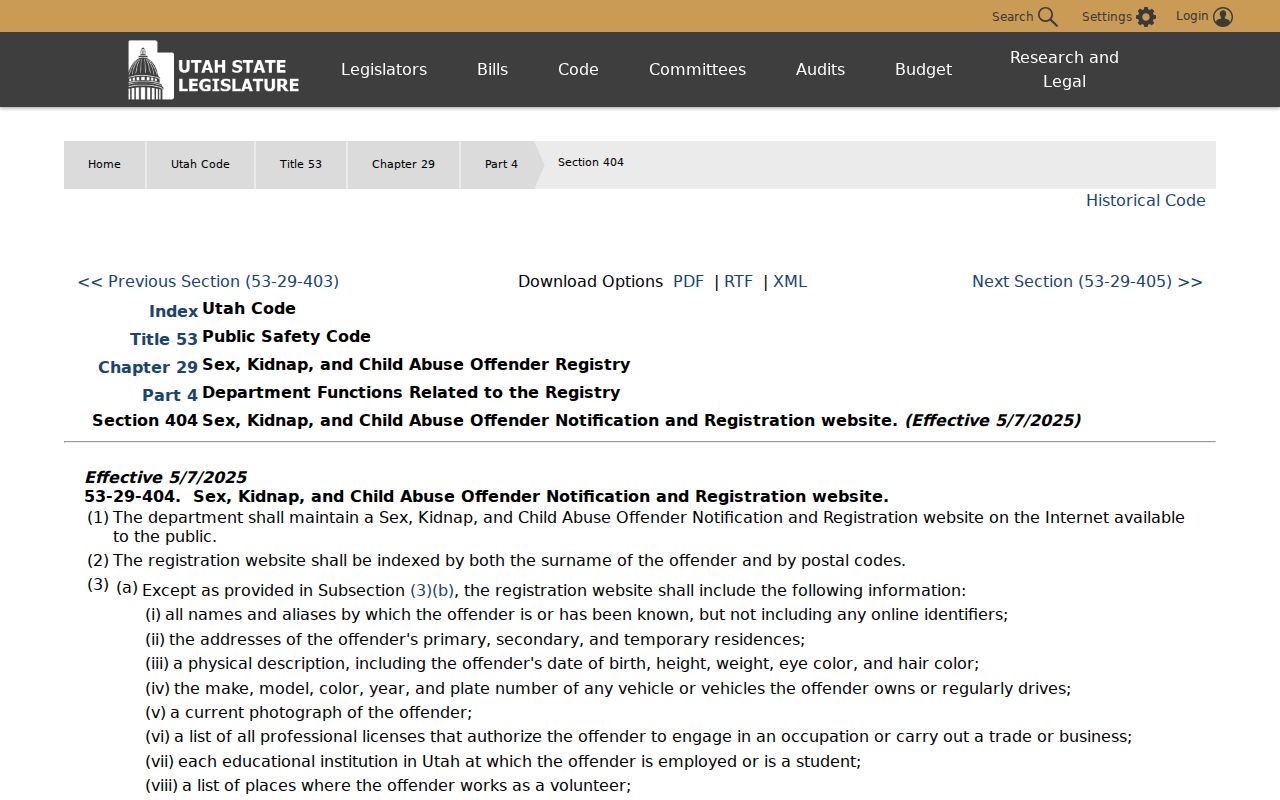
The statute makes clear that publication serves notification, while related criminal laws still apply to harassment, stalking, and threats.
Registry misuse is unlawful. Utah Code Section 53-29-404 forbids using registry information to harass, stalk, or threaten a registrant or family. Never confront a listed person or invent facts from an unclear status.